
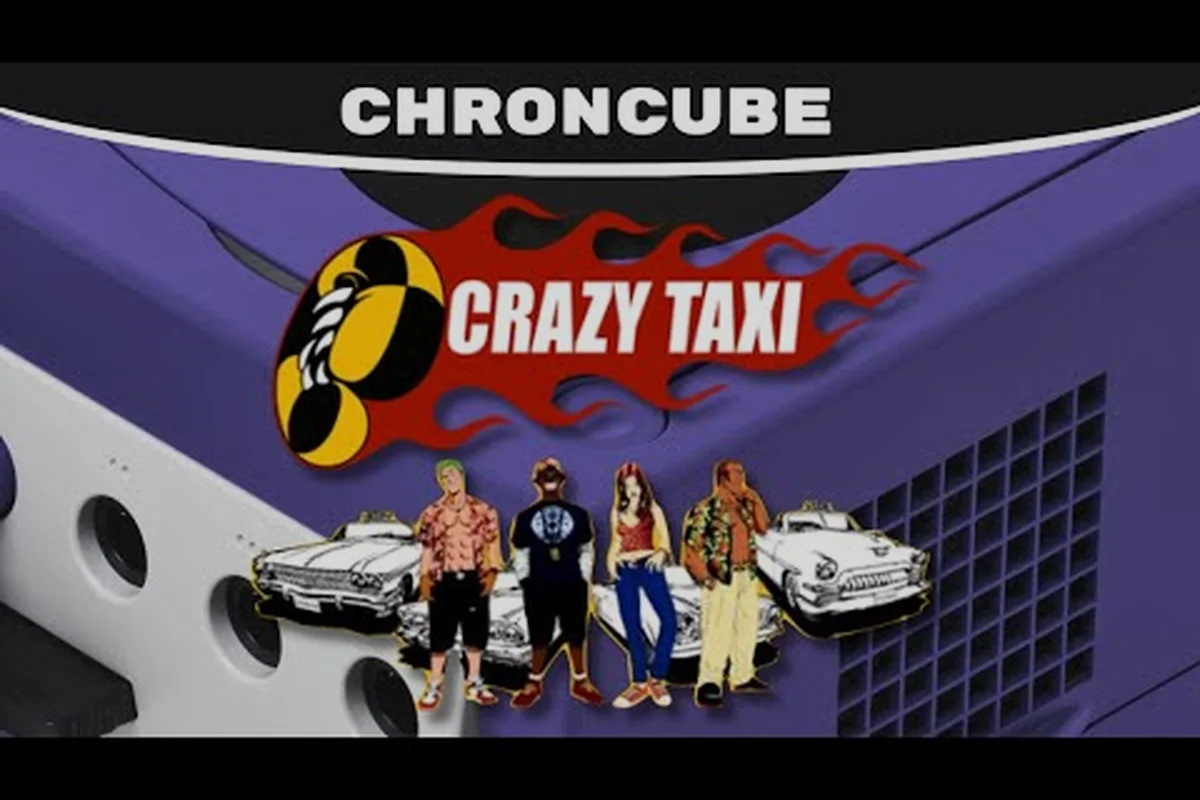
The Crazy Taxi series began in 1999 arcades, and after more than two decades of sequels, spinoffs, and a long hibernation, SEGA is reviving the Crazy Taxi franchise with Crazy Taxi: World Tour in 2027. Understanding that crazy taxi history explains why the reboot matters, because every new mechanic in World Tour — from Crazy Dash to the six-cab garage — traces back to design choices Hitmaker made in the original arcade board.
The original 1999 arcade game launched the franchise as a straightforward score attack: pick up a fare, drive as recklessly as possible, earn tips, beat the clock. That loop is still the spine of the 2027 reboot, and the Crazy Taxi: World Tour official website confirms the classic gameplay returns alongside five open-world cities, story campaign, and online multiplayer. Before players queue into the closed network test on September 11–13, 2026, it helps to know what they're actually rebooting.
The 1999 Arcade Original That Started the Crazy Taxi Series
Crazy Taxi first rolled out of Hitmaker's arcade division in 1999, with a Dreamcast port following in early 2000. According to the Wikipedia entry for Crazy Taxi, the series has players assume the role of a taxi driver who must accumulate money by delivering passengers to their destinations in the fastest time possible, earning tips by performing crazy stunts — drifts, jumps, and near-misses — before time runs out. That single paragraph from the community wiki is the most concise description of the entire franchise's DNA, and it has barely changed across 27 years.
The arcade original distinguished itself from other driving games of the era through three pillars: an open city (a fictional California stand-in based on San Francisco), licensed punk rock audio (The Offspring and Bad Religion on the home ports), and aggressive advertiser tie-ins (KFC, Pizza Hut, Tower Records, and Levi Strauss & Co. on the cab roof). Those choices made the Crazy Taxi original feel like nothing else in the arcade in 1999, and they became the franchise's signature.
| Crazy Taxi (1999) — Core Pillars | Description |
|---|---|
| Developer | Hitmaker (later absorbed into SEGA AM3) |
| Publisher | SEGA |
| Arcade Release | February 1999 |
| Dreamcast Port | 2000 |
| City | Fictional California stand-in |
| Original Score | Kenji Kanno (in-house compositions) |
| Licensed Tracks | The Offspring, Bad Religion (added on Dreamcast port) |
| Signature Stunts | Drift, jump, near-miss, Crazy Hop |
| Cab Roster | 4 drivers in the Dreamcast release |
The Dreamcast port of the original Crazy Taxi is the version most Western players remember. It added the famous Offspring and Bad Religion soundtrack, expanded the driver roster with B.D. Joe, Axel, Gena, and Gus, and turned what was a coin-op score attack into a console home staple. By the end of 2000, the Crazy Taxi original had shipped more than a million copies on Dreamcast, and the franchise's DNA was already locked in.
Why the 1999 Arcade Original Still Matters
Crazy Taxi 1999 established three design rules that every subsequent release has followed. First, the timer is the enemy: every design choice downstream — bigger fares, time extensions, Crazy Dash — exists to give the player more clock. Second, stunts are currency: drifting, jumping, and near-missing are not cosmetic flourishes but the only path to the tip multipliers that separate good runs from great runs. Third, the cab is a character: each driver brings a different personality and a different car, and that driver-cab pairing is the franchise's version of a character select screen.
The Crazy Taxi: World Tour reboot does not abandon any of those rules. It layers them with modern open-world design, cross-platform multiplayer, and a story campaign, but the underlying loop is identical. Players who understand why the 1999 original mattered will recognize the same bones under World Tour's Unreal Engine 5 visuals.
The Dreamcast-to-PS2-Xbox Era: Crazy Taxi 2 and Crazy Taxi 3
After the original proved the franchise, SEGA greenlit two console sequels that expanded the scope dramatically. Crazy Taxi 2 dropped in 2001 for Dreamcast, and Crazy Taxi 3: High Roller arrived in 2002 for both PS2 and Xbox. These two games are the Crazy Taxi history most players actually played, because they ran on hardware that mainstream households owned.
| Title | Year | Platform(s) | Cities | New Mechanic |
|---|---|---|---|---|
| Crazy Taxi | 1999 / 2000 | Arcade, Dreamcast | 1 (California stand-in) | Core loop |
| Crazy Taxi 2 | 2001 | Dreamcast | 2 (Santa Monica, Springfield) | Crazy Hop, multiple destinations per fare |
| Crazy Taxi 3: High Roller | 2002 | PS2, Xbox, later PC | 3 (West Coast, Las Vegas, Glitter Oasis) | Stunt modes, mini-games |
| Crazy Taxi 3: High Roller (PC) | 2003 | PC | 3 | Mini-game collection focus |
Crazy Taxi 2 (2001, Dreamcast) — The Sequel That Dared to Split
Crazy Taxi 2 took the franchise to two new cities: a Santa Monica-inspired beach town and a fictional Springfield with roller coasters scattered across the map. The big mechanical addition was the Crazy Hop, a mid-air trick triggered by jumping off specific ramps, which let players earn extra time while airborne. The Crazy Hop gave Crazy Taxi 2 a skill ceiling the original lacked, because the best runs chained hops across multiple ramps in a single fare.
The sequel also experimented with fare variety. Instead of one passenger, one destination, Crazy Taxi 2 introduced multiple destinations per fare: pick up a group, drop them at point A, then continue to point B. That experiment changed the rhythm of a run, because the cab never idles at one drop-off. Crazy Taxi: World Tour's modern fare system looks more like Crazy Taxi 2 than the original, and SEGA has confirmed that picking up chained fares is the recommended way to keep momentum in a money run.
Crazy Taxi 3: High Roller (2002, PS2 / Xbox) — The First True Multicity Sequel
Crazy Taxi 3: High Roller is the franchise's first multi-platform sequel and its largest city count at launch, with three distinct cities available from the start. The game also added the "Crazy X" mission structure — short, score-attack challenges inspired by Crazy Box — and leaned harder into the mini-game format. The Xbox version in particular was the first Crazy Taxi to land on a US-built console, which is one reason the series kept a Western audience alive even after the Dreamcast died.
High Roller's most lasting contribution to Crazy Taxi history was the mini-game culture. The game's "Crazy Box"-style challenges — small, tightly scoped score-attack courses — became the training ground for every player who wanted to learn the drift timing and jump arcs before going back to the main cities. Crazy Taxi: World Tour's upcoming "Arcade Mode" is the franchise's first dedicated return to that mini-game format in over twenty years, and it shows how influential High Roller's design was on the reboot.
Spinoffs, Handhelds, and the Long Hiatus (2003–2019)
After Crazy Taxi 3, the franchise went through a long stretch of portable experiments and a roughly fifteen-year gap with no mainline console release. The Crazy Taxi series history during that period is a story of formats: GBA, PSP, and eventually mobile, before SEGA's 2023 announcement of a new mainline entry.
| Spinoff | Year | Platform | What It Added |
|---|---|---|---|
| Crazy Taxi: Catch a Ride | 2003 | GBA | Top-down handheld conversion, simplified controls |
| Crazy Taxi Fare Wars | 2007 | PSP | Recompiled PS1 originals with two-player ad-hoc multiplayer |
| Crazy Taxi City Rush | 2014 | iOS / Android | Free-to-play mobile reboot, touched the modern audience |
| Crazy Taxi Gazillionaire | 2018 | Mobile | Idle / management spin on the franchise |
| Crazy Taxi Classic | 2017 | iOS / Android | Port of the Dreamcast original with modern touch controls |
The GBA and PSP Era (2003–2007)
Crazy Taxi: Catch a Ride on the Game Boy Advance (2003) and Crazy Taxi Fare Wars on PSP (2007) are the two handheld milestones that kept the brand alive in the West. Catch a Ride was a top-down conversion that traded the arcade's camera for something closer to a classic top-down racer, which worked surprisingly well for a 2D GBA screen. Fare Wars was the more ambitious of the two: it recompiled the PS1-era Crazy Taxi 1 and 2 onto PSP with ad-hoc multiplayer, and it was the first time players could pick up a fare against a friend in the same room.
Neither handheld spinoff moved the franchise forward mechanically, but both kept Crazy Taxi visible in retail during a period when SEGA was otherwise focused on Sonic, Yakuza, and Phantasy Star. The PSP multiplayer experiment in Fare Wars is also the closest historical analog to Crazy Taxi: World Tour's upcoming six-player online mode, which makes the spinoff more relevant than its critical reception suggests.
The Mobile Free-to-Play Pivot (2014–2018)
Crazy Taxi City Rush (2014) and Crazy Taxi Classic (2017) marked SEGA's first serious attempt to bring the franchise to mobile. City Rush was a free-to-play reboot with touch-controlled drifting and energy timers; Classic was a more faithful port of the Dreamcast original with virtual buttons. City Rush was the more interesting of the two, because it introduced a generation of younger players to the franchise's name, even if the gameplay loop was diluted by gacha and microtransactions.
For a deeper look at how the franchise evolved across that period, the crazy taxi evolution breakdown traces the shift from the Off-Duty Widget product-placement contracts of 2014 through the Crazy Taxi Gazillionaire soft launch in 2017, covering how the iconic Crazy Box-style mini-games were rebuilt as a gacha system and why the Crazy Taxi original Arcade-style fare rush was reworked into a timer-based mobile format.
The 2023 Announcement and the Path to Crazy Taxi: World Tour
After roughly five years of mobile-only releases, SEGA officially announced Crazy Taxi: World Tour in 2023 as the franchise's first mainline console entry since 2002. The game's existence was confirmed at the official Crazy Taxi: World Tour website, where players can sign up for the closed network test running September 11–13, 2026, and where SEGA has committed to a 2027 launch across PC, PlayStation 5, Xbox Series X|S, and Nintendo Switch 2.
The roadmap from announcement to launch has been unusually long, which is part of why the closed network test in September 2026 is such a significant milestone. According to the Steam store page, the game ships with five open-world cities, a story campaign centered on Axel chasing a stolen cab, car customization via the Tune Up system, and up to six-player cross-platform multiplayer. The 2027 launch is the first time the franchise has had all of those pieces together at once since the original 1999 board.
| Crazy Taxi: World Tour — Confirmed Pillars | Source |
|---|---|
| Developer | SEGA (in-house, not Hitmaker) |
| Engine | Unreal Engine 5 |
| Platforms | PC (Steam), PS5, Xbox Series X|S, Switch 2 |
| Cross-Play | Yes — full cross-platform online |
| Story Lead | Axel (cab stolen, chasing the masked thieves) |
| Confirmed Cab Roster | 6 vehicles (Axel, B.D. Joe, plus four more) |
| Network Test Window | September 11–13, 2026 |
| Launch Window | 2027 |
Why the Reboot Took So Long
The 14-year gap between Crazy Taxi 3: High Roller (2002) and the 2023 World Tour announcement is the longest silence in the Crazy Taxi series history, and it was not for lack of fan demand. SEGA has commented in interviews that reviving the franchise required rebuilding the right internal team after Hitmaker was folded into AM3 and then into SEGA's wider studios. The 2023 announcement confirmed that the team had landed on Unreal Engine 5 as the development foundation, which is the same engine powering much of the current generation of open-world games.
For the technical breakdown of how Unreal Engine 5 changes the franchise's scope, the crazy taxi unreal engine piece covers the open-world tech and what it means for the reboot's city scale.
What's Actually New in Crazy Taxi: World Tour
The 2027 reboot is not a remaster. It is a full reimagining that keeps the original's DNA but layers in modern systems. The five-city world is a new map structure, replacing the original's single California stand-in. The story campaign with Axel's cab theft is a new narrative layer that the 1999–2002 trilogy did not have. The Tune Up garage is a customization system that lets players spec each cab for specific modes. And the six-player cross-platform online mode is the franchise's first real competitive multiplayer since PSP Fare Wars.
| 1999–2002 Trilogy | Crazy Taxi: World Tour (2027) |
|---|---|
| 1–3 cities per game | 5 open-world cities |
| Arcade + local score attack | Story + Arcade + Online multiplayer |
| Fixed cab stats | Tune Up garage with 6 upgrade slots |
| No narrative | Axel quest / masked thieves story |
| Dreamcast / PS2 / Xbox | PS5 / Xbox Series X|S / Switch 2 / PC |
| 4 drivers per game | 6-cab roster (Axel, B.D. Joe, Gena, Gus, two more) |
| Local 2P only (PSP) | 6-player cross-platform online |
The 2027 reboot's place in the Crazy Taxi series history is the most ambitious the franchise has ever been, building on the 1999 arcade original that established the pick-up-and-deliver timer loop. Every pillar from that Dreamcast-era release — countdown timer, stunt chains, the licensed Offspring and Bad Religion soundtrack, and the four iconic character cabs (Gus, Bix, Hot-D, and Roxanne) — returns, but each system has been expanded for World Tour's open-city sandbox and online mode.
Why Crazy Taxi History Matters Going Into 2027
The Crazy Taxi: World Tour reboot is the first mainline entry in the franchise's history with full cross-platform play, an open-world five-city scope, and a story campaign. None of that would exist without the 1999 original, and none of it would have arrived without the long quiet period that let SEGA rethink what a Crazy Taxi game could be in 2026.
For anyone who played the Dreamcast original or the PS2 era, the 2027 launch is a homecoming after more than two decades. For anyone who discovered the franchise through City Rush or Classic, it is the first chance to play a full-budget Crazy Taxi on current hardware. Either way, the Crazy Taxi series roots in 1999 are what make the reboot feel like a continuation, not a reinvention.
What part of Crazy Taxi history do you want to see revived in the 2027 reboot — the open-world sandbox of Crazy Taxi 2 (2001), the Off-Road mode from Crazy Taxi 3: High Roller (2002), or the original arcade fare structure from Crazy Taxi (1999)? Drop your picks in the comments, share which cab you'd main (Classic, Peddle, or Gena), and join the Crazy Taxi network test in September 2026 to help shape the next chapter of the franchise.
Frequently Asked Questions
When did the Crazy Taxi series start?
The Crazy Taxi series began in February 1999 as a coin-op arcade game running on SEGA's NAOMI board, developed by Hitmaker. The Dreamcast port arrived in 2000, which is the version most Western players remember — it was a launch-window title that cemented the "Fare Game" scoring formula and the Offspring/Bad Religion licensed soundtrack worldwide.
What was the first Crazy Taxi game?
The first Crazy Taxi game is the 1999 arcade original from Sega, ported to the Dreamcast in 2000. It established the franchise's core loop that every later entry in the crazy taxi series inherited: pick up passengers, deliver them fast, earn tips through stunts, and beat the clock.
How many mainline Crazy Taxi games are there?
There are four mainline Crazy Taxi games. The first three were developed by Hitmaker for SEGA: Crazy Taxi (arcade 1999, Dreamcast 2000), Crazy Taxi 2 (Dreamcast 2001), and Crazy Taxi 3: High Roller (PS2 and Xbox 2002). The fourth, Crazy Taxi: World Tour, launches in 2027 on PC, PS5, Xbox Series X|S, and Switch 2.
Is Crazy Taxi: World Tour a remaster or a reboot?
Crazy Taxi: World Tour is a full reboot, not a remaster. It uses Unreal Engine 5, ships with five new open-world cities, and adds a story campaign, online multiplayer, and the Tune Up garage system that the original trilogy never had.
Will the original Crazy Taxi soundtrack return in 2027?
No, the full original 1999 soundtrack hasn't been confirmed for 2027. SEGA has only stated that Kenji Kanno's score and select licensed tracks return alongside new licensed music, but the complete World Tour track list remains unpublished, so iconic Offspring and Bad Religion cuts aren't guaranteed.