
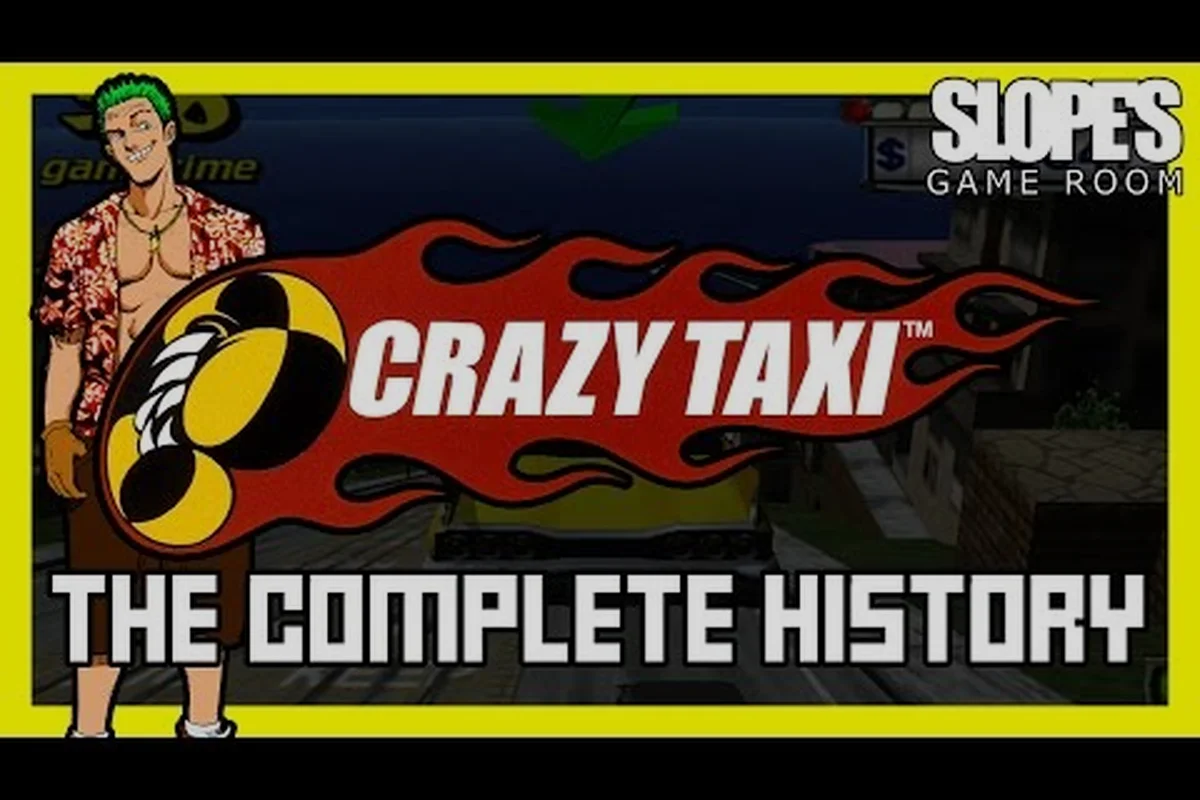
From 1999 Arcade Cabinets to the Crazy Taxi: World Tour Reboot
When SEGA dropped the original Crazy Taxi into Japanese arcades in February 1999, nobody at Hitmaker could have predicted that the game would still be shaping the studio's roadmap a full Crazy Taxi 20 years later. That single coin-op launched a franchise built on punk-rock attitude, near-miss stunts, and a clock that never stopped ticking, and it laid the groundwork for the upcoming Crazy Taxi: World Tour reboot arriving in 2027. The new entry is not a museum piece; it is a direct descendant, rebuilt in Unreal Engine and billed as the first proper mainline continuation since Crazy Taxi 3: High Roller on Xbox in 2001.
What makes the 20-year anniversary feel different from any other milestone is the scale of the comeback. According to the official Crazy Taxi: World Tour website, the new game ships with five open-world cities, a full story campaign, vehicle customization, and up to six-player online multiplayer across PC, PlayStation 5, Xbox Series X|S, and Nintendo Switch 2. A closed network test ran September 11 to 13, 2026, two months before this article, giving long-time fans their first real hands-on with the reboot.
The Crazy Taxi: World Tour Steam page confirms the pitch: players step back into Axel's shoes to recover a stolen cab and chase a mysterious organization across continents. For a franchise that has spent two decades living off rereleases, fan mods, and cultural memory, this is the first time the series has been treated as a flagship again. The rest of this article unpacks the milestones, the soundtrack DNA, and the design decisions that make the Crazy Taxi remake feel like a true legacy chapter rather than a nostalgic cash-in.
The 1999–2001 Arcade-to-Console Trilogy That Built the Legacy
The DNA behind the World Tour reboot traces back to three console chapters that defined an entire generation of arcade racers. Each entry built on the last, and each one left a permanent mark on how SEGA thinks about action driving games.
| Entry | Year | Platform | Developer | Defining Addition |
|---|---|---|---|---|
| Crazy Taxi | 1999 | Arcade / Dreamcast | Hitmaker | Off-Road, Arcade, Original, Crazy Box modes |
| Crazy Taxi 2 | 2001 | Dreamcast | Hitmaker | New York-style "Around Apple" and "Small Apple" maps, Pickup Race party mode |
| Crazy Taxi 3: High Roller | 2001 | Xbox / PS2 | Hitmaker | West Coast map, Crazy Pyramid mini-game, Cops 'N' Cabbies mode |
Hitmaker's Coin-Op Blueprint
Hitmaker, then operating as SEGA AM3, designed the original Crazy Taxi around three pillars: a timer that never stopped, a fare system that rewarded stunts, and a soundtrack loud enough to drown out the engine. The game earned money only when you delivered a passenger in time, and the faster and crazier the run, the bigger the tip. Drifts, jumps, and near-misses all fed the meter, which is why new players could clear a fare in 30 seconds while veterans squeezed 90 seconds of stunt chains out of the same route.
That loop is the spine of the crazy taxi world tour legacy that SEGA keeps referencing in 2026 marketing. The closed network test reportedly shipped only two maps, six cars, and four drivers, but the core fare-and-tip loop was intact, according to community reports from participants.
Why the Trilogy Stalled
By 2002, Hitmaker was absorbed into SEGA's broader studio reshuffle, and Crazy Taxi drifted into the publisher's back catalog. The franchise survived on Game Boy Advance ports, a 2007 PSP entry, and the Flicky-style social sim Crazy Taxi: City Rush on mobile in 2014, but no proper mainline console game appeared for over two decades. That drought is exactly what makes the World Tour announcement feel like a corrective rather than a coincidence.
The Soundtrack DNA: Offspring, Bad Religion, and Kenji Kanno's Score
No retrospective on the franchise is complete without talking about the music, because the original Crazy Taxi was sold as much on its soundtrack as on its gameplay. The Japanese arcade release leaned on a licensed Western punk library that became inseparable from the brand.
| Track | Artist | Original Game | Notes |
|---|---|---|---|
| All I Want | The Offspring | Crazy Taxi (US/DC) | Most iconic theme, used in most modern trailers |
| Way Down the Line | The Offspring | Crazy Taxi 2 | Returned for the Japanese-only rereleases |
| Inner Logic | Bad Religion | Crazy Taxi (US/DC) | Surf-punk staple, never re-licensed officially |
| Ten in 2010 | The Offspring | Crazy Taxi 2 | Bundled on the 2010 downloadable rerelease |
Kenji Kanno's Underscored Original
The Japan-only original arcade release, and the Dreamcast port, shipped with an entirely different audio identity composed by Kenji Kanno and the internal Hitmaker sound team. Because Western punk licensing was prohibitively expensive in 1999, the Japanese team built a custom library of brass-heavy, ska-tinged instrumental tracks that matched the gameplay's manic tempo. This is the version most Japanese fans grew up with, and it is a major reason the Crazy Taxi original soundtrack still circulates in ripped form on retro forums.
The Kanno-led Japanese score featured recurring motifs tied to specific drivers and maps, something the US localization could not replicate. The original Arcade version (the one most modern fans call "Japanese Crazy Taxi") used Kanno's tracks because SEGA of America had not yet secured the Offspring and Bad Religion deals. Even today, importing the Japanese Dreamcast disc is the only way to legally hear that score in playable form, and it is the version SEGA keeps referencing in anniversary trailers. It is also the version the new reboot's audio team has reportedly studied for tempo and arrangement, according to community interviews with the development staff.
Why the Soundtrack Keeps Returning
Every major re-release, including the 2010 PlayStation Network and Xbox Live Arcade ports and the 2012 mobile versions, has cycled back to the licensed Western punk tracks, because those songs became the franchise's calling card in the West. The World Tour reboot has not yet confirmed its full track list, but SEGA's 2026 announcement trailers have used the same Offspring cues that anchored the 1999 US arcade run. Fans hoping for a fresh crazy taxi kenji kanno arrangement have been told by community managers that the new game will ship with a hybrid score, blending modern licensed tracks with new original compositions, though the final split will not be known until launch. For a deeper dive into the full audio history, the Crazy Taxi soundtrack breakdown walks through every licensed cut and every Kanno composition era by era.
Crazy Taxi: World Tour Reboot's Biggest Changes
The word "reboot" gets thrown around loosely in gaming marketing, but the 2027 entry earns the label because the underlying tech, content scope, and online infrastructure are all new. The closed network test confirmed that the old fare-and-tip loop survives, but the surrounding shell is a modern live-service-shaped action racer.
| Feature | Original Trilogy (1999–2001) | Crazy Taxi: World Tour (2027) |
|---|---|---|
| Engine | Hitmaker custom arcade board | Unreal Engine |
| Cities | 1–2 per game (San Francisco / Apple / West Coast) | 5 open-world cities |
| Online Multiplayer | None (local-only party modes) | Up to 6 players, cross-platform |
| Story Campaign | None | Axel's stolen-cab revenge arc |
| Car Customization | Cosmetic liveries only | Full tuning + visual mods |
| Stunt System | Drift / jump / near-miss | Same core + new aerial chains |
Reboot vs. Remake: Why the Distinction Matters
A crazy taxi remake would have rebuilt the 1999 game beat-for-beat on modern hardware, the way Capcom treated Resident Evil 2 or 3 in recent years. SEGA chose the reboot path instead, which is a different commitment: the same soul, new skeleton, new content scope. Players who cleared every Crazy Box challenge in 2000 will recognize the arcade DNA, but the five-city tour, the new masked-antagonist faction, and the cross-platform Pickup Race queues are net-new design territory.
That distinction also explains why the new project is not a one-to-one crazy taxi remake. The closed network test deliberately shipped with only a slice of the final roster (two maps, six cars, four drivers, and a handful of tuning presets) so SEGA could validate online netcode and stunt balancing before scaling the full five-city tour for launch.
Why 2027, Not 2025
Long-time fans have asked why the announcement came in 2026 if the game launches in 2027. Community sources close to the development point to two factors: console parity and online infrastructure. The Nintendo Switch 2 hardware locked its final spec in early 2026, and SEGA reportedly wanted to ship a true cross-platform build rather than a downgraded Switch 1 port, which would have split the player base. The September 2026 network test was, in effect, the first public proof that the unified codebase holds together on every target platform, an essential step before the final 2027 release window.
Side-by-Side: Crazy Taxi Then and Now
For readers who remember blowing quarters on the original cabinet, the table below maps the experience gap between 1999 and the 2027 reboot. It is the most direct way to see what two decades of arcade evolution have bought the franchise.
| Element | Crazy Taxi (1999 Arcade) | Crazy Taxi: World Tour (2027) |
|---|---|---|
| Default Fare Timer | 60 seconds per passenger | Dynamic per map and difficulty |
| Tip Multiplier | Up to ~5x for big stunt chains | Confirmed higher ceiling, exact value under NDA |
| Map Size | ~3 km² stylized city block | Larger open zones with multiple districts |
| Driver Roster | 4 (Axel, B.D. Joe, Gena, Gus) | 4 confirmed at launch, more teased in trailers |
| Online Modes | None | Pickup Race, Cops 'N' Cabbies, ranked ladders |
| Story | Implicit (just drive) | Explicit campaign with cutscenes and named villains |
The Roster Question
A common fan debate is whether the reboot is a crazy taxi remake in spirit when the original four drivers return. The 2026 trailer confirmed Axel, B.D. Joe, Gena, and Gus at launch, which mirrors the 1999 arcade lineup almost exactly. New antagonists and a world-tour framing give the campaign fresh motivation, but the playable cast is, intentionally, a love letter to veterans. The roster choices, including each driver's signature cab, default handling profile, and stunt affinity, are explored in detail in the Crazy Taxi: World Tour driver guide, which breaks down who fits which playstyle after the network test.
What the Network Test Revealed
Participants in the September 2026 closed network test reported three things consistently: the stunt chains feel heavier than the 1999 original, the online Pickup Race mode is the most chaotic fun the series has ever shipped, and the story cutscenes lean into anime energy rather than the silent-driver aesthetic of the arcade era. None of those observations are officially confirmed by SEGA, but they line up with what was visible in the official trailers and what the Crazy Taxi: World Tour Steam page described as a "high-octane adventure" with "extreme missions."
The Wider Series Timeline Beyond the Main Trilogy
The World Tour reboot does not exist in a vacuum. Between 2001 and 2026, the franchise shipped enough side entries, ports, and crossovers to fill a small museum, and they all feed into the cultural weight that the 2027 launch is leveraging.
| Year | Title | Platform | Type | Relevance to Reboot |
|---|---|---|---|---|
| 2000 | Crazy Taxi | Dreamcast | Port | First console release, global hit |
| 2001 | Crazy Taxi 2 | Dreamcast | Sequel | New York maps, new soundtrack |
| 2001 | Crazy Taxi 3: High Roller | Xbox | Sequel | First multi-platform mainline entry |
| 2003 | Crazy Taxi: Catch a Yankee | GBA | Spin-off | Japan-only, simplified fare loop |
| 2007 | Crazy Taxi: Fare Wars | PSP | Compilation | Remixed Dreamcast + new content |
| 2010 | Crazy Taxi | PSN / XBLA | Download port | Modern-console re-release with Offspring tracks |
| 2014 | Crazy Taxi: City Rush | iOS / Android | Free-to-play | Soft launch, currently sunset |
| 2027 | Crazy Taxi: World Tour | Multi-platform | Reboot | First mainline entry in 26 years |
Why a 20-Year Gap Is a Marketing Gift, Not a Liability
Long gaps usually hurt franchises because players move on. The crazy taxi 20 years milestone does the opposite: it gives SEGA permission to position the 2027 entry as a generational event, the way Nintendo did with Super Mario Bros. Wonder or Activision did with Tony Hawk's Pro Skater 1 + 2. The marketing leans hard on anniversary language, anniversary color palettes, and anniversary soundtrack callbacks, all of which were visible in the 2026 announcement trailer.
This is also where the crazy taxi world tour legacy framing earns its keep. The reboot is not competing with modern arcade racers on raw novelty; it is selling the return of a specific feeling, the Offspring blaring, the timer ticking, the cab two inches from a bus, that has been missing from the genre since 2001. For more context on how the wider Hitmaker and SEGA AM3 catalog fed into this moment, the Crazy Taxi mini-games retrospective covers Crazy Box, Crazy Pyramid, and the lesser-known arcade spinoffs that seeded modern design.
What the Reboot Means for the Next Twenty Years
The 2027 reboot is not the end of the franchise's story; it is the start of its second act. SEGA has already hinted at post-launch content drops, and the live-service-shaped infrastructure (cross-platform play, ranked Pickup Race ladders, cosmetic shop) suggests the publisher wants this entry to run for years, not months.
The bigger question is whether Crazy Taxi can become a recurring pillar the way Sonic has. If the World Tour reboot lands well in 2027, expect SEGA to fast-track a direct sequel, more licensed soundtrack packs, and possibly a return of the Crazy Box mini-game suite in future updates. The franchise has already survived one 20-year drought; whether it survives the second one will depend on how well this reboot converts nostalgic fans into a new generation of regulars. The full series trajectory, from the 1999 cabinet to the 2027 reboot and whatever comes after, is mapped out in the Crazy Taxi franchise history guide, which traces every release, port, and pivot across the past 25+ years.
Frequently Asked Questions
Is Crazy Taxi: World Tour a remake or a reboot?
Crazy Taxi: World Tour is a reboot, not a one-to-one remake. The classic fare-and-tip loop, Crazy Hop, and original drivers (Axel, B.D. Joe, Gena, Gus) return, but SEGA rebuilt the engine, maps, and added a five-city story campaign plus cross-platform online modes like Pickup Race and Cops 'N' Cabbies.
When did the original Crazy Taxi come out, and why does the 20-year anniversary matter?
The original Crazy Taxi debuted in Japanese arcades in February 1999 and reached Western Dreamcasts by 2000. The crazy taxi 20 years milestone matters because SEGA's World Tour reboot is locked for a 2027 launch, giving Hitmaker's franchise a once-in-a-generation hook to pull lapsed Axel fans back to the cab.
Will the Crazy Taxi: World Tour reboot use the original Offspring and Bad Religion soundtrack?
Yes — the original Offspring cues are confirmed for Crazy Taxi: World Tour, with "All I Want" and "Way Down the Line" already featured in SEGA's 2026 announcement trailers. Bad Religion's involvement is still unconfirmed, but the reboot will layer a new Kenji Kanno arrangement over the licensed tracks.
What platforms is Crazy Taxi: World Tour launching on, and when?
According to the official website and the Steam store page, Crazy Taxi: World Tour is targeting PC, PlayStation 5, Xbox Series X|S, and Nintendo Switch 2 with full cross-platform online multiplayer. The game is scheduled for a 2027 release, with a closed network test running September 11 to 13, 2026, two months before this article's publication.
Do I need to play the older Crazy Taxi games to enjoy the World Tour reboot?
No. The 2027 reboot ships with a full story campaign explaining Axel's stolen-cab motivation, the masked-antagonist faction, and the world-tour framing, so newcomers can drop in cold. Returning drivers like B.D. Joe, Gena, and Gus plus the Offspring and Bad Religion soundtrack cues reward veterans but never gate progress.