
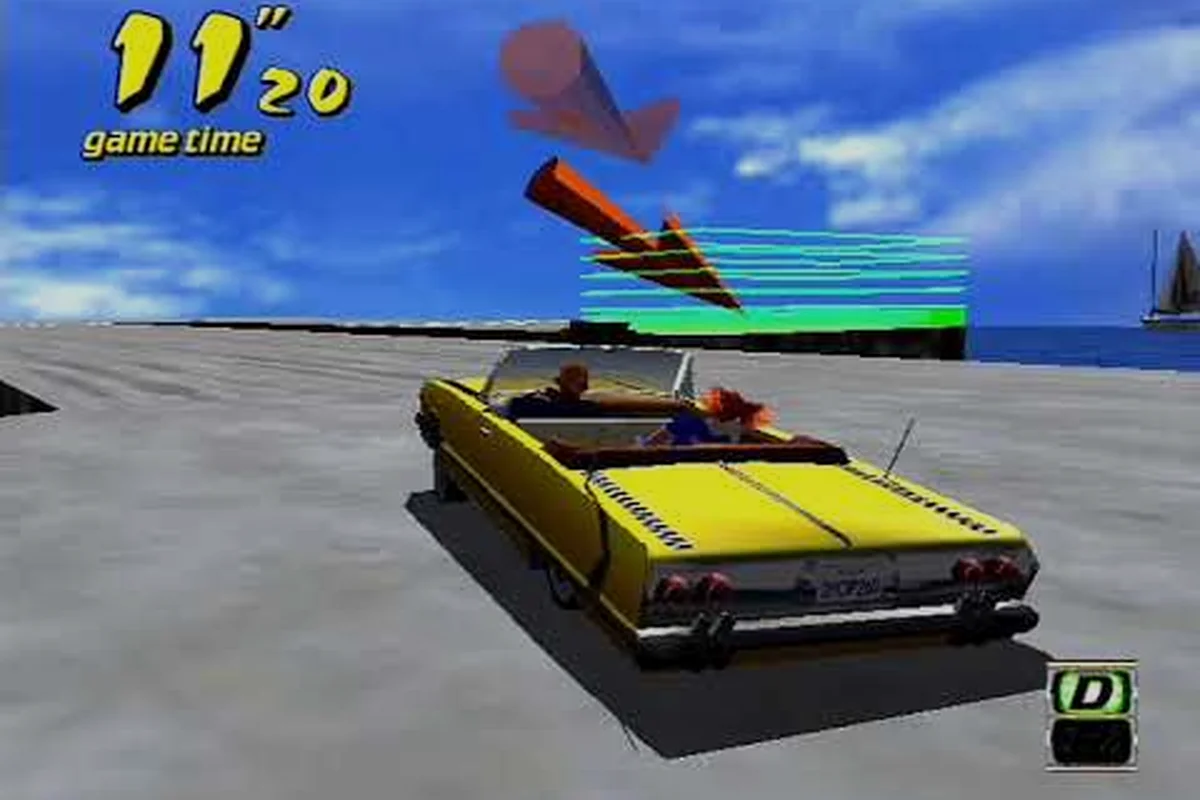
The original arcade soul of Crazy Taxi: World Tour classic gameplay is back, and you can chase high scores even when the servers are quiet. SEGA's next chapter keeps the long-running series' pick-up-and-go feel intact, with offline play supporting the same trick inputs, fare routes, and arcade scoring that defined the Dreamcast era. According to the official Crazy Taxi: World Tour website, the game launches in 2027 across five open-world cities, but the offline suite already mirrors the staples fans expect. This guide breaks down the moves, modes, and mental math that turn a single taxi run into a leaderboard run.
What Classic Gameplay Actually Means in Crazy Taxi: World Tour
Crazy Taxi: World Tour classic gameplay is the phrase SEGA and the community use to describe the offline arcade experience that sits underneath the new online modes. It is the same loop the series has been refining since 1999: grab a fare, thread traffic like a maniac, get the passenger to the destination before the timer dies, and bank the cash. According to the Steam store page for Crazy Taxi: World Tour, the story campaign follows Axel chasing a mysterious organization across five open-world cities, but the loop itself is unchanged.
The Core Pickup-to-Drop-off Loop
Every classic run starts the same way. You roll out of a parking spot, the destination arrow lights up, and a passenger waves you down with a glowing hand. Pick them up, follow the green arrow, and the meter starts paying out. The faster you arrive, the bigger the fare, and the bigger the combo multiplier when you stack consecutive deliveries. That single loop is what carries the offline suite, and it is what the rest of this guide assumes you have already felt under your thumbs. If you are still learning how the destination arrow behaves in traffic, the Crazy Taxi: World Tour how to drop off passengers guide covers arrow logic, drift entries, and Crazy Dash timing in detail.
How the Classic Suite Differs From the Online Modes
The online network test scheduled for September 11-13, 2026 puts Pickup Race and Cops 'N' Cabbies on the table for up to six players. Those are competitive modes built around ranked brackets and custom lobbies. Classic gameplay is the opposite — a single player, a single cab, and a single timer. The mental model is closer to an arcade machine than a battle pass, and the scoring math rewards repetition rather than competition.
| Mode Type | Player Count | Scoring Driver | Best For |
|---|---|---|---|
| Arcade Run (Classic) | 1 | Time + Combo + Tricks | High-score chasing |
| Crazy Box Style Challenges | 1 | Objective completion | Learning trick inputs |
| Story Campaign Missions | 1 | Story progression | Unlocking cities |
| Pickup Race (Online) | 2-6 | Wins + Ranked points | Competitive leaderboards |
| Cops 'N' Cabbies (Online) | 2-6 | Bounties + Arrests | Chaotic team play |
The Trick System: Crazy Taxi: World Tour How to Do Tricks
If you have only ever held the gas button and prayed, you are leaving a third of your score on the asphalt. Tricks are the bonus layer of Crazy Taxi: World Tour classic gameplay, and every single one of them fires off the same way it did in Crazy Taxi 1 and 2. According to community testing on the closed beta branches, the input buffer still feels generous, which means the bar to entry is low but the ceiling is high.
The Original Five Trick Inputs
These are the bread-and-butter moves that should be in your muscle memory before you ever touch a high-score run. Every one of them is a directional input on the stick or D-pad combined with a tap of a face button, and every one of them pays out a flat cash bonus on top of your fare meter.
-
Crazy Drift — Tap the brake while turning hard to throw the cab sideways through a corner. This is your main combo extender, because every drift that touches grass or a wall resets your multiplier.
-
Crazy Dash — Double-tap the jump button to launch the cab forward with a burst of speed. Best used when you are about to clip a building and need a quick recovery line.
-
Crazy Back — Hold reverse while braking to throw the cab into a quick reverse flick. Great for shaking a passenger who spawned behind you, and it counts as a trick even when nobody is watching.
-
Crazy Jump — Hit the jump button off a ramp or curb to get airborne. Each jump adds a flat cash bonus, and chaining two ramps back to back stacks the payout.
-
Crazy Stop — Tap the brake and reverse at the same time to skid the cab to a halt. Useful for lining up tight drop-off zones without losing your multiplier.
| Trick | Input | Base Bonus | Combo Behavior |
|---|---|---|---|
| Crazy Drift | Brake + Hard Turn | Medium | Extends multiplier on clean exit |
| Crazy Dash | Jump x2 | Low | No combo effect, pure speed |
| Crazy Back | Reverse + Brake | Low | Counts as trick, no combo |
| Crazy Jump | Jump off ramp | Medium | Chains with second jump |
| Crazy Stop | Brake + Reverse | Low | Safe line-up for drop-off |
Building a Stunt Guide Muscle Memory Plan
The mistake most new players make is trying to learn every trick in a single run. Treat the trick system like a fighting game — isolate one move per session and grind it until your thumbs do it without thinking. Spend one practice run doing nothing but Crazy Drift entries on long corners, then a second run doing nothing but Crazy Jump chains off every ramp you can find. By the third run, the inputs blend together and your score starts climbing without you thinking about it. The full Crazy Taxi: World Tour beginner guide maps out a recommended two-hour onboarding routine if you want a more structured path.
Score Attack Runs and the High-Score Mentality
Crazy Taxi: World Tour score attack is the heart of the offline experience, and Crazy Taxi: World Tour high score chasing is where the classic gameplay loop stops being a casual ride and starts being a sport. A score attack run is just a long arcade run where you commit to a single strategy, ride it for the full timer, and try to maximize every fare, every trick, and every multiplier reset. According to long-time series players, the difference between a casual run and a top-tier score attack is almost always a handful of small decisions rather than one big trick.
The Three Levers of a Score Attack Run
Every score attack run is a juggling act between three competing resources: time, multiplier, and trick bonus. You can only save so much time, only keep the multiplier alive for so long, and only land so many tricks per minute. The art is balancing them so that one never fully starves the others.
| Lever | How It Grows | How It Dies | Top-Tier Strategy |
|---|---|---|---|
| Time Bonus | Fast drop-offs | Late drop-offs | Skip far fares when multiplier is low |
| Combo Multiplier | Clean tricks + clean driving | Wall hits, off-road, jump landing | Save drifts for long sweepers |
| Trick Bonus | Volume of inputs | Missing the input | Spam jump off every curb |
Picking the Right Fares for a High Score
Not every fare is worth picking up during a score attack. The base payout is a function of distance, but the real money is the combo bonus on top. Short fares that take ten seconds to deliver are usually better than long fares, because they let you chain three or four of them inside the time it would take to run one long fare. Veteran players recommend staying within a four-block radius of your current position during a score attack run, because chasing a far destination burns both your timer and your multiplier if anything goes wrong.
-
Short Hop Fares — Best for building multiplier early. Pick these up until your combo is at least 4x, then start mixing in longer runs.
-
Long Bridge Fares — Mid-run best. The bridge gives you a long uninterrupted sprint where you can chain drifts without traffic interference.
-
Far Airport Fares — Late-run best. The airport is almost always the farthest destination, so save it for when your multiplier is already at 7x or higher.
Crazy Box Style Challenges: Where You Actually Learn the Game
The Crazy Box from Crazy Taxi 2 was a single-player challenge mode that threw specific tasks at the player — jump this gap, drift this corner, deliver this fare in under 10 seconds. Crazy Taxi: World Tour keeps the spirit of that mode alive through its challenge suite, and it is the single best place to practice if you want to take the classic gameplay loop seriously. According to SEGAbits' Germany map reveal coverage, the new open-world cities like Germany will ship with their own challenge packs, which means there is a steady stream of new tricks to learn long after the story campaign ends.
Why Challenges Matter More Than Free Roam
Free roam is great for vibes, but challenges are where you find your weak points. A challenge that asks you to land three consecutive Crazy Drift entries on a mountain pass will teach you the input buffer far faster than any amount of free-roam drifting ever will. The score cap on each challenge is also a built-in feedback loop — if you cannot break the S-rank, you know exactly which trick you need to grind.
| Challenge Type | What It Tests | Best Practice Drill |
|---|---|---|
| Time Attack Delivery | Route optimization | Restart until you know the optimal path |
| Trick Combo Challenge | Input execution | Lower difficulty, then climb ranks |
| No-Drift Drop-off | Pure driving line | Practice brake-tap turning before attempting |
| Long Jump Gauntlet | Ramp reading | Memorize ramp angles and exit speeds |
How to Use Challenges to Prep for Score Attack
Think of the challenge suite as a warm-up gym for the score attack modes. If you can land a clean S-rank on a Trick Combo Challenge that demands five back-to-back Crazy Drifts, your score attack runs will benefit immediately, because the muscle memory is already there. The other benefit is that challenges are short — most of them clock in under three minutes — which makes them perfect filler content between longer runs.
Offline Play: How to Get the Most Out of Crazy Taxi: World Tour Without a Connection
Crazy Taxi: World Tour offline play is not a stripped-down fallback. The full arcade mode, the challenge suite, and the story campaign all run without a network connection, and the only thing you give up is the online multiplayer and the live leaderboards. According to the Crazy Taxi: World Tour Steam page, the game supports cross-platform play on PlayStation 5, Xbox Series X|S, Nintendo Switch 2, and Windows PC, but every one of those platforms also supports a fully offline single-player experience.
Setting Up a Clean Offline Run
Before you boot up an offline score attack, there are a few setup steps that are easy to miss. The game defaults to online leaderboards and cloud saves in many menus, and you will want to switch those off if you want pure arcade conditions.
-
Disable Cross-Play in Settings — Keeps you off the multiplayer matchmaker, which is irrelevant for offline play but cleans up the menu clutter.
-
Switch to Arcade Mode on Boot — Story mode missions have scripted triggers that can interrupt a high-score run. Arcade mode gives you a clean timer and a clean map.
-
Pick Your Starting City — Each of the five cities has its own road layout. Pick the one with the most ramps and bridges if you are chasing a trick-heavy high score, and the one with the densest downtown if you are chasing short-hop fare chains.
-
Mute the Music Layer — The licensed soundtrack is great, but the music swells can distract you from the audio cues that signal a successful trick. Players report that the trick sound effect is the cleanest feedback loop.
Tracking Your High Score Across Sessions
The game does save your personal best locally, but you can also keep a notebook or a phone spreadsheet to log which tricks you landed, which fare chains paid out the best, and which maps you struggled on. According to community data, top offline score attack runs on the closed beta hover around the 1.2-1.5 million credit mark, and the players who break that ceiling almost always do it through small optimization passes over multiple sessions rather than a single perfect run. A simple log lets you spot patterns — maybe your multiplier always dies at the same corner, or maybe you always lose 30 seconds to a single bad passenger spawn.
| Run Number | Strategy Tried | Final Score | Notes |
|---|---|---|---|
| Run 1 | Drift-heavy, ignore short fares | 820,000 | Multiplier kept dying at bridge exit |
| Run 2 | Short fares only | 1,050,000 | Score climbed, but tricks underused |
| Run 3 | Balanced: 60% short / 40% drift chains | 1,310,000 | Best run so far |
| Run 4 | Focus on Crazy Jump chains off airport ramp | 1,180,000 | Big single bonuses, lower consistency |
The Five-City World and How It Changes the Classic Loop
The new five-city world tour is the biggest change to the classic gameplay loop in the series' history. Each city has its own road layout, its own landmarks, and its own passenger behavior, which means the optimal score attack run looks different in every location. The Traxion coverage of the Germany reveal shows Axel tearing through autobahns, castles, and holiday markets, all of which create new ramp opportunities and new drift corners. Series creator Kenji Kanno emphasized that the world tour is about journey, not just destination, and the gameplay reflects that.
City-by-City Quick Reference
Because the cities have not all been revealed yet, the table below mixes confirmed and predicted information. According to community data and the official reveals so far, here is the current city map.
| City | Status | Best Trick Spot | Best Fare Type |
|---|---|---|---|
| Starting City (USA) | Confirmed | Downtown grid corners | Short hop fares |
| Germany | Confirmed | Autobahn on-ramps | Bridge fares |
| City 3 | TBA | Likely coastal | Likely airport |
| City 4 | TBA | Likely mountain | Likely long fare |
| City 5 | TBA | TBA | TBA |
Why the City Choice Matters for Score Attack
The most underrated part of Crazy Taxi: World Tour classic gameplay is that the city you start in shapes the run you are about to have. A dense downtown grid rewards short-hop fare chains, while a wide-open autobahn rewards long Crazy Jump chains. If you are new to score attack, start in the densest city available, because short-hop chains are the easiest way to learn the multiplier math. If you are chasing a specific trick bonus, switch to a city with more ramps. If you are still figuring out the basics of how the game plays, the Crazy Taxi: World Tour for beginners guide walks through the first ride in detail, including which city to pick on the character select screen.
Building a Personal High-Score Routine
The single biggest thing that separates a casual classic player from a serious score attack runner is a routine. A routine is just a checklist you run through before every attempt — it removes decision fatigue, it makes your practice sessions consistent, and it gives you a baseline to measure improvements against. According to community data, the players who climb the offline leaderboards almost always have a written routine, even if it is just a few bullet points on a phone.
A Sample Pre-Run Checklist
-
Pick the City — Match the city to your score attack goal (short fares, big tricks, or bridge runs).
-
Pick the Character — Each cab has slightly different handling. The Crazy Taxi: World Tour best character guide breaks down how the four returning drivers differ in drift tightness and top speed.
-
Set the Timer — If the game lets you set a session length, go with 15 minutes for your first attempts. Anything shorter is too short to build a multiplier, anything longer is too long to focus through.
-
Plan the First Three Fares — Decide in advance which passenger you are going to pick up first, where you are going to deliver them, and what trick you are going to chain off the drop-off. Having the first 30 seconds of your run pre-planned removes the worst panic mistakes.
-
Note the Time of Day — This sounds silly, but the in-game lighting changes the visibility of the destination arrow. If the arrow is hard to read at sunset, practice your night runs in the same city.
Post-Run Review
After every run, jot down two things: the final score, and the single biggest mistake you made. Reviewing the notes after five runs almost always shows a pattern — maybe you keep blowing the same corner, maybe you keep missing the same ramp, maybe you keep ignoring a passenger because they spawned in a bad spot. Fix that one thing in the next five runs, and your score climbs in measurable steps rather than random spikes. The full Crazy Taxi: World Tour full guide has more granular advice on Steam settings, install paths, and system requirements if you want to dial in the technical side of your offline setup.
Frequently Asked Questions
What is the best way to start a Crazy Taxi: World Tour classic gameplay run?
The best start is a short-hop fare within a four-block radius, followed immediately by a Crazy Drift through the first corner. This builds your multiplier early, which compounds across the whole run, and it teaches you the input buffer in low-pressure conditions. Once the combo is at 3x or higher, you can start mixing in longer fares and bigger tricks.
How do I unlock the full trick list in Crazy Taxi: World Tour?
The base trick list — Crazy Drift, Crazy Dash, Crazy Back, Crazy Jump, and Crazy Stop — is available from the first run in any mode. The advanced variants and city-specific trick challenges unlock by completing the Crazy Box style challenge packs that ship with each new open-world city, including the confirmed Germany map revealed at gamescom 2026.
Does Crazy Taxi: World Tour offline play support high score saves?
Yes. The offline arcade mode saves your personal best locally on the same platform you are playing on, even when the network is disconnected. Live online leaderboards require a connection, but your local high score and your challenge completion progress are saved offline and sync to the cloud the next time you go online.
Can I practice tricks without a passenger in Crazy Taxi: World Tour?
Yes — Crazy Box style challenges give you a controlled zone with no fare timer, so you can grind Crazy Jump and Crazy Drift combos until the inputs feel automatic. Free roam also lets you drive each of the five open-world cities without passengers, which is the best way to memorize layout before chasing a high score.
How long is a typical Crazy Taxi: World Tour score attack run?
A typical Crazy Taxi: World Tour score attack run lasts about 12 minutes, which is long enough to build a 7x-9x multiplier but short enough to keep your focus sharp. Most players from the closed beta branches cluster around this mark, though extended mode pushes sessions toward 20 minutes for a longer grind.